What Does Ohio’s Hands-Free Driving Law Mean for Crash Claims?
By John K. Rinehardt, Board Certified Civil Trial Attorney (NBTA)
04-08-26
If you were injured in a collision caused by a distracted driver in Columbus, Ohio, the state’s hands-free driving law may significantly strengthen your path to compensation. Ohio’s cell phone driving law, originally enacted under Senate Bill 288 and effective since April 4, 2023, prohibits holding or physically supporting an electronic wireless communications device while operating a motor vehicle. The law was subsequently amended by House Bill 33, with changes effective October 3, 2023. For accident victims, this law creates a clearer framework for establishing fault because a violation can serve as direct evidence of negligence.
If you were hurt in a distracted driving crash in Columbus or anywhere in Ohio, Rinehardt injury Lawyers is ready to review your case. Call 419-529-2020 or reach out online to discuss your options today.
Understanding Ohio’s Hands-Free Driving Law
Ohio’s hands-free law targets one of the most common causes of preventable crashes: drivers using handheld electronic devices. Under Ohio Revised Code Section 4511.204, no person may operate a motor vehicle while using, holding, or physically supporting an electronic wireless communications device with any part of their body.
The statute was most recently amended by House Bill 54 of the 136th General Assembly, with changes effective June 30, 2025. Ohio is among a growing number of states strengthening distracted driving enforcement, and these laws carry real weight in both criminal and civil proceedings.
What the Law Prohibits
At its core, the law makes it illegal to hold a phone or similar device while driving. You do not need to be texting or making a call. Simply holding the device in your hand or propping it against your leg while behind the wheel may constitute a violation.
Key Exceptions You Should Know
Not every use of an electronic device behind the wheel violates the statute. Ohio Revised Code Section 4511.204(B) lists several exceptions that permit certain types of device interaction, including:
-
Hands-free or voice-operated device use
-
A single touch or swipe to activate or deactivate a feature
-
GPS navigation, provided the driver is not holding the device
-
Making emergency calls (such as dialing 911)
-
Use by utility service vehicle drivers responding to emergencies or power outages
These exceptions matter in crash claims because the at-fault driver’s insurance company may argue the driver fell within a permitted use category. An experienced attorney can investigate the facts and counter those arguments effectively.
💡 Pro Tip: After a crash, ask the responding officer whether a distracted driving citation was issued. A citation can serve as valuable evidence when pursuing your injury claim. You can also obtain Columbus crash reports through Ohio’s ODPS system to document the incident.
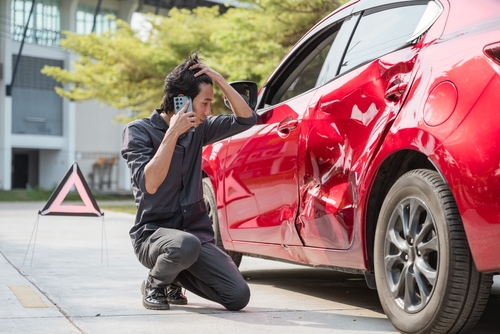
How Distracted Driving Violations Strengthen Crash Claims in Columbus
A distracted driving violation can be powerful evidence for accident victims seeking compensation. When a driver breaks Ohio’s hands-free law and causes a collision, the violation itself may help establish the “breach” element of a negligence claim.
Strict Liability and What It Means for Your Case
Ohio classifies a violation of Section 4511.204 as a strict liability offense. Under Section 4511.204(D)(5), prosecutors do not need to prove the driver intended to be distracted. Simply holding the device establishes the violation. In a civil injury case, this violation may constitute negligence per se, helping establish that the driver breached a legal duty of care. However, you must still prove that the violation caused the crash and resulted in your injuries.
💡 Pro Tip: Strict liability under Ohio’s hands-free law means the at-fault driver cannot claim they “didn’t mean to” use their phone. Evidence showing they were holding the device at the time of the crash may support your negligence claim.
Ohio law also addresses situations where distraction contributes to another traffic violation. Under Section 4511.991, if a driver commits a traffic offense while distracted and the distraction is a contributing factor, they face the standard penalty plus an additional fine of up to $100.
Penalties That Signal the Severity of Distracted Driving
Ohio’s penalty structure for hands-free law violations escalates with repeat offenses. The following table outlines the fine schedule under Section 4511.204(D)(1):
|
Offense |
Fine |
Additional Consequences |
|---|---|---|
|
First offense |
Up to $150 |
None |
|
Second offense (within 2 years) |
Up to $250 |
None |
|
Third or subsequent (within 2 years) |
Up to $500 |
Possible 90-day license suspension |
|
Violation in a construction zone |
Double the applicable fine |
Enhanced penalties apply |
These escalating penalties demonstrate how seriously Ohio treats distracted driving, which can influence how courts and juries view fault in a crash claim.
💡 Pro Tip: If your crash occurred in a construction zone, penalties for the at-fault driver are doubled under Ohio law. This enhanced enforcement may also factor into your claim’s value.
How an Auto Accident Lawyer in Columbus, OH Can Build Your Distracted Driving Case
Proving that a driver was distracted requires more than just your word against theirs. A thorough investigation typically involves obtaining phone records, reviewing police reports, analyzing crash scene evidence, and consulting accident reconstruction professionals. An auto accident lawyer in Columbus, OH can handle each of these steps while you focus on medical recovery.
Insurance companies often attempt to minimize payouts, even when a clear distracted driving violation exists. Adjusters may argue that your injuries were pre-existing, that you share fault, or that the device use fell within a legal exception. Having legal representation helps ensure these tactics do not reduce the compensation you deserve.
💡 Pro Tip: Ohio law requires law enforcement officers who issue distracted driving citations to report them to their agency. These official records become part of the public record and may be obtainable during discovery.
Filing Deadlines: Ohio’s Statute of Limitations for Crash Claims
Time limits apply to every injury claim, and missing them can permanently bar your right to compensation. Under Ohio Revised Code Section 2305.10, an action for bodily injury or personal property damage must generally be brought within two years from the date of the accident.
While certain narrow exceptions may extend this deadline in limited circumstances, courts generally interpret tolling provisions strictly. The safest approach is to consult with an attorney as soon as possible to preserve your legal options. You can learn more about Ohio’s distracted driving laws and how they may affect your timeline.
💡 Pro Tip: Even if you are unsure about the severity of your injuries, do not wait to explore your legal rights. Some injuries worsen over time, and early action helps preserve critical evidence.
Steps to Take After a Columbus Distracted Driving Crash
What you do after a crash can directly affect the outcome of your claim. If you suspect the other driver was using a handheld device, take these steps:
-
Call 911 and request that officers document any suspected distracted driving
-
Seek immediate medical attention, even if injuries seem minor
-
Photograph the scene, including the other driver’s vehicle and any visible devices
-
Collect contact information from witnesses who may have observed phone use
-
Avoid giving recorded statements to the other driver’s insurance company before speaking with an attorney
Each of these actions creates a record that supports your case.
Frequently Asked Questions
1. Can I sue a distracted driver in Ohio even if they were not cited?
Yes, a police citation is helpful but not required to pursue a civil injury claim. You can present other evidence of distraction, such as phone records, witness testimony, or crash reconstruction analysis.
2. Does the hands-free law apply to GPS and navigation apps?
Using GPS is permitted under Ohio law, but only if you are not holding the device. The statute allows navigation use when the device is mounted or supported without physical contact. If a driver was holding their phone to view directions at the time of a crash, that conduct may still violate the law.
3. What compensation can I recover after a distracted driving crash?
Victims may be entitled to compensation for medical expenses, lost income, pain and suffering, and other damages. The specific amount depends on the severity of your injuries and the strength of the evidence. An auto accident lawyer in Columbus, OH can evaluate the full scope of your potential recovery.
4. How does Ohio’s law compare to other states’ distracted driving laws?
Ohio is part of a national trend toward stricter hands-free requirements. Many states now prohibit handheld device use while driving, though the specific penalties and exceptions vary.
5. Can the at-fault driver take a safety course instead of paying the distracted driving fine?
Under Section 4511.204(D)(2), a first-time offender may elect to attend a distracted driving safety course instead of paying the fine. They must submit evidence of completion to the court within 90 days. However, choosing this option does not result in dismissal of the charge, and the violation still counts as a prior offense if the driver commits a subsequent violation within two years. This option does not shield the driver from civil liability in your injury claim.
Take Action to Protect Your Rights After a Distracted Driving Crash
Ohio’s hands-free driving law provides meaningful protections for everyone on the road and creates important legal tools for crash victims. If a distracted driver caused your injuries in Columbus or elsewhere in Ohio, you may have a strong foundation for a negligence claim. Every case depends on its specific facts, and acting promptly helps preserve the evidence you need.
The team at Rinehardt injury Lawyers is prepared to help you navigate the claims process and fight for the compensation you deserve. Call 419-529-2020 or contact us today to schedule a consultation with an auto accident lawyer in Columbus, OH who understands how Ohio’s distracted driving laws affect your case.