How to Get Probate Approval for a Child’s Injury Settlement in Columbus
By John K. Rinehardt, Board Certified Civil Trial Attorney (NBTA)
10-28-26
Protecting Your Child’s Recovery Through the Probate Court
Key Takeaways: In Ohio, a child’s injury settlement usually needs probate court approval before payment, because minors generally can’t legally release their own claims. To get approval in Columbus, a parent or guardian typically files an application with the Franklin County Probate Court under Ohio Revised Code § 2111.18 and Sup.R. 67 and 68. The application includes a current physician’s statement, settlement terms, itemized deductions and liens, and a plan for holding the funds. The court generally holds a hearing, which the child and applicant usually attend, where a judge or magistrate decides whether the settlement serves the child’s best interests. If approved, the court may order protections such as a restricted account, a structured settlement, or a court-supervised guardianship, and funds generally stay protected until the child turns 18. Families should watch for medical liens, how money is split between the parents’ claim and the child’s claim, and shorter deadlines that may apply to the parents’ own claims. An experienced Columbus personal injury lawyer can build the injury claim and handle the probate approval process to help avoid delays.
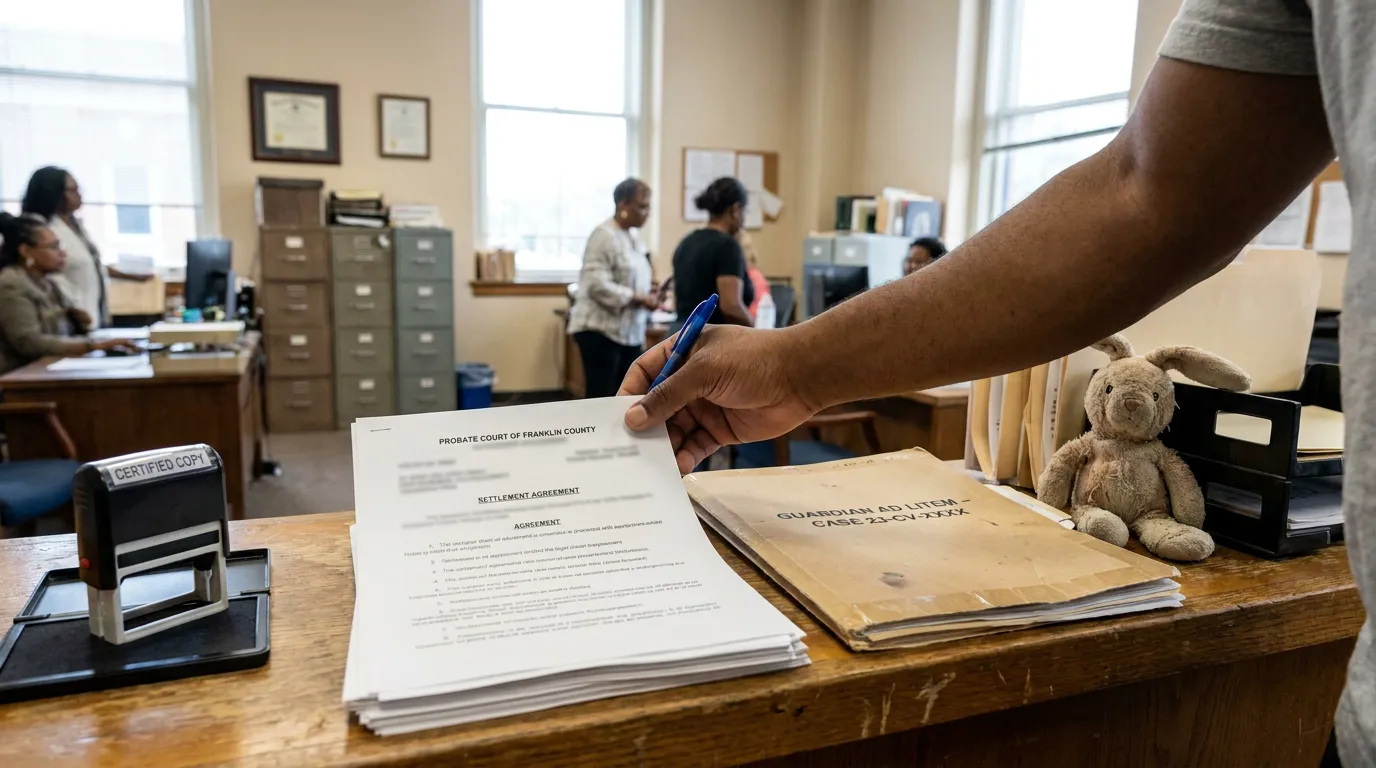
When a child is hurt because of someone else’s negligence, the case usually doesn’t end when the insurer agrees to a settlement. In Ohio, a probate court generally must review and approve a settlement for a minor before the money is paid out. A parent or guardian typically files an application with the probate court in the county where the child lives, the Franklin County Probate Court for most Columbus families. The parent provides supporting documents and generally attends a hearing where a judge or magistrate decides whether the settlement serves the child’s best interests. Knowing how this works ahead of time can help your family avoid delays and keep your child’s compensation protected.
If your child was injured and you are weighing a settlement offer, Rinehardt Injury Attorneys can help you understand the process from start to finish. Call 419-529-2020 or contact us now to talk about your family’s situation.
Why Ohio Courts Oversee Settlements for Injured Children
Ohio law generally treats minors as lacking the capacity to be bound by contracts, including releasing their own injury claims. A parent generally cannot simply accept a check and sign away a child’s rights the way an adult could settle their own case. The probate court steps in to help ensure the agreement is fair and the money is set aside for the child.
The legal framework comes from Ohio’s guardianship statutes. Ohio’s guardianship chapter, Ohio Revised Code Chapter 2111, sets out how probate courts appoint guardians for minors, what powers and duties those guardians have, and how the court supervises a minor’s property. Ohio Revised Code § 2111.18 allows a guardian, or a parent when no guardian has been appointed, to settle a minor’s injury claim with the probate court’s approval. Chapter 2111 applies statewide, including in Franklin County, though local rules and practices may vary.
The Role of the Guardian of the Estate
In larger settlements, the court may appoint a guardian of the estate to receive and manage a child’s settlement money. Under Chapter 2111, a parent or another suitable person may apply for this appointment. The guardian owes duties to the court and the child, which may include filing inventories and accountings and following court orders about how funds may be spent.
Ohio law provides an exception for smaller settlements. Under Ohio Revised Code § 2111.05, when a minor’s assets are $25,000 or less, the court may skip appointing a guardian and instead order the money deposited in a restricted account or paid in another protective way. Whether this exception applies depends on the settlement amount and the court’s discretion, so families should not assume a guardianship will or will not be required.
Walking Through the Ohio Minor Settlement Probate Approval Process
The process generally follows a predictable set of steps, though individual courts may add local requirements. Ohio’s Rules of Superintendence set statewide standards for applications to settle a minor’s claim, particularly Sup.R. 68, along with Sup.R. 67 for estates of minors not exceeding $25,000. The Franklin County Probate Court also has local rules and forms that parents and their attorneys generally must follow.
Step One: Preparing the Minor Settlement Application
The process usually begins with filing a minor settlement application in the probate court of the county where the child lives. Under Sup.R. 68 and standard probate forms, the application generally must include:
- A statement from the treating physician describing the injuries, treatment, prognosis, and whether the child has fully recovered
- A description of how the injury happened and the settlement terms
- An itemized breakdown of medical bills, liens, and other proposed deductions
- A plan for how the child’s net proceeds will be held or invested
- The consent of the parents, or an explanation if a parent has not consented
Missing or incomplete paperwork is one of the most common reasons for delays. Courts may send an application back or reschedule a hearing when a physician’s statement is outdated or lien information is missing.
💡 Pro Tip: Ask your child’s doctor for a current statement close to your filing date. Courts may look closely at whether a child’s condition has stabilized, and an outdated medical opinion can raise questions about whether the child may need future care the settlement does not cover.
Step Two: Attending the Hearing
After the application is filed, the court generally schedules a hearing. Sup.R. 68 generally requires both the child and the applicant to attend unless excused. A judge or magistrate may ask about the child’s recovery, how the settlement was calculated, and how the family plans to protect the money.
The court’s central question is whether the settlement serves the child’s best interests. Courts may consider the severity and permanence of the injuries, the strength of the liability case, available insurance coverage, and whether proposed deductions, including attorney fees, are reasonable. If the court has concerns, it may ask for more information or deny approval.
Step Three: Protecting the Approved Funds
If the court approves the settlement, it generally enters an order explaining how the child’s share must be handled. Common options include a restricted bank account that cannot be accessed without a court order, a structured settlement annuity making payments over time, or a guardianship account supervised by the court. In most cases, funds stay protected until the child turns 18, subject to any court-approved exceptions or structured payment terms.
| Protection Option | How It Generally Works | Common Considerations |
|---|---|---|
| Restricted bank account | Funds held in the child’s name; withdrawals require a court order | Simple to set up; limited growth |
| Structured settlement | Periodic payments through an annuity | Payments may extend into adulthood; terms are generally fixed |
| Guardianship of the estate | Court-supervised guardian manages funds | May require ongoing accountings and court filings |
Common Challenges When Settling a Minor’s Claim
Settling a minor’s claim often involves issues that don’t arise in an adult’s case. Medical liens are one example. Health insurers, Medicaid, and hospitals may assert repayment rights against the settlement, and the court typically wants to see how those liens will be resolved before approving the distribution.
The split between the parents’ claim and the child’s claim can also create confusion. In Ohio, parents may have their own claim for the child’s medical expenses and loss of services or consortium, separate from the child’s claim for pain and suffering and future losses. The court may look closely at how a settlement divides money between parents and child to ensure the child’s share is fair.
Settlements that seem too small for the injuries may draw extra scrutiny. If a child has a permanent injury, such as scarring or lasting impairment, the court may question whether the proposed amount accounts for future needs. Building a well-documented damages case before settling can help support the proposed amount at the hearing.
Timing, Deadlines, and What Families Should Know
Ohio generally pauses the statute of limitations for a child’s own injury claim until the child turns 18. Under Ohio Revised Code § 2305.16, the two-year limitations period in Ohio Revised Code § 2305.10 generally does not begin to run on a minor’s claim until adulthood. Exceptions exist, however, medical malpractice claims, for example, have their own tolling and repose rules under Ohio Revised Code § 2305.113.
A parent’s separate claim may be on a much shorter timeline. The parents’ claim for medical expenses and loss of services is generally not tolled by the child’s minority and may be subject to the standard two-year period. Claims against government entities can also involve immunity defenses and procedural requirements that differ from ordinary civil lawsuits. Because these deadlines depend on the facts, families should get guidance early rather than assume they have years to act.
Waiting too long can also make evidence harder to find. Witnesses move away, surveillance footage gets erased, and records become harder to get. Even though the child’s own claim may be tolled, preserving evidence right away can strengthen the case that eventually goes before the court.
How a Columbus Personal Injury Lawyer Can Help
An attorney can handle both sides of the process: building the injury claim and managing the probate approval steps. A plaintiff’s attorney can investigate fault, document the child’s damages, negotiate with the insurance company, and then prepare the application materials the probate court expects. Working with a Columbus personal injury lawyer can help the settlement better reflect the child’s losses before it reaches a judge.
Probate procedures and local practices also change over time, and attorneys follow those developments. Programs such as the Ohio State Bar Association’s Ohio Probate 2024 Round-Up seminar cover recent updates to Ohio probate law and practice, including guardianship matters. Keeping up with these changes helps attorneys spot procedural issues before they slow down a family’s case.
Frequently Asked Questions
1. Does every child injury settlement in Columbus need court approval?
In general, yes. Under Ohio Revised Code § 2111.18 and Sup.R. 68, a minor’s injury claim is typically settled with probate court approval. Without it, the release may not bind the child, so insurers typically require approval before paying.
2. Can I use my child’s settlement money to pay household bills?
Generally, no. The court usually restricts the child’s funds for the child’s benefit and may require a court order before any withdrawal. Parents keep their legal duty to support their child, and courts generally deny requests to use the money for ordinary living costs.
3. What happens if the court does not approve the settlement?
The court may ask for more information, suggest changes, or deny the application. If denied, negotiations may need to continue, or the case may move forward in litigation. The child’s claim generally stays intact, subject to any applicable deadlines.
4. When can my child access the money?
In most cases, funds become available when the child turns 18. Structured settlements may pay out on a different schedule set in the settlement terms. Court-approved exceptions may apply in limited circumstances.
5. Where do Columbus families file for approval?
Families generally file in the probate court of the county where the child lives. For most Columbus residents, that is the Franklin County Probate Court, which follows both statewide rules and its own local rules. You can find more guides on injury claims on our personal injury resource page.
Moving Forward With Confidence for Your Child
Ohio minor settlement probate approval exists to help ensure an injured child’s compensation is fair and protected. The process generally involves a detailed application, a court hearing, and court-ordered safeguards for the money. Ohio Revised Code Chapter 2111 and Sup.R. 67 and 68 set the framework, but every family’s case turns on its own facts, from the child’s medical outlook to the liens and deadlines involved. Understanding the process ahead of time can help you avoid delays and put your child in a stronger position.
Your child’s future deserves careful attention at every step. The team at Rinehardt Injury Attorneys is ready to guide your family through the injury claim and the court approval process. Call 419-529-2020 or schedule your consultation today.
Disclaimer: This content is for informational purposes only and is not legal advice. Every case is unique, and results may vary. Consult an attorney about your specific circumstances.