Can a Delivery Driver Sue a Dog Owner After a Bite in Ohio?
By John K. Rinehardt, Board Certified Civil Trial Attorney (NBTA)
11-24-26
Bitten While Dropping Off a Package in Ohio? Here Is What the Law Says
Key Takeaways: In many cases, a delivery driver can sue a dog owner after a bite in Ohio. Ohio Revised Code § 955.28(B) generally makes owners, keepers, and harborers strictly liable for injuries their dogs cause, even if the dog never bit anyone before. The law covers "any injury," so knockdowns and falls may also support a claim. The few exceptions cover criminal trespass, other crimes, and teasing, tormenting, or abusing the dog on the owner’s property. They usually don’t apply to drivers making lawful deliveries. Ohio’s modified comparative fault rule may reduce damages, or bar recovery if your fault is greater than the defendants’ combined fault. Plan to file within two years of the bite under § 2305.10(A); Ohio courts have more consistently applied this two-year deadline to dog bite claims, even those brought as strict liability claims under § 955.28. Quickly recording the attack, your injuries, and your losses may help your claim. Drivers hurt on the job may also qualify for workers’ compensation.
In many cases, a delivery driver can sue a dog owner after a bite in Ohio. Ohio generally uses a strict liability rule for dog injuries. That means the person responsible for the dog may have to pay for your injuries even if the dog never bit anyone before and the owner did nothing careless. Delivery drivers approach unfamiliar homes every day, often with full hands and no warning about the dog inside. Exceptions, deadlines, and fault rules can still change the result.
If a dog bit or attacked you on your route, you don’t have to sort out your options alone. Rinehardt Injury Attorneys helps injured Ohioans in Columbus, Mansfield, and nearby communities understand their rights after dog attacks. Call 419-529-2020 or contact us now to talk about what happened and what to do next.
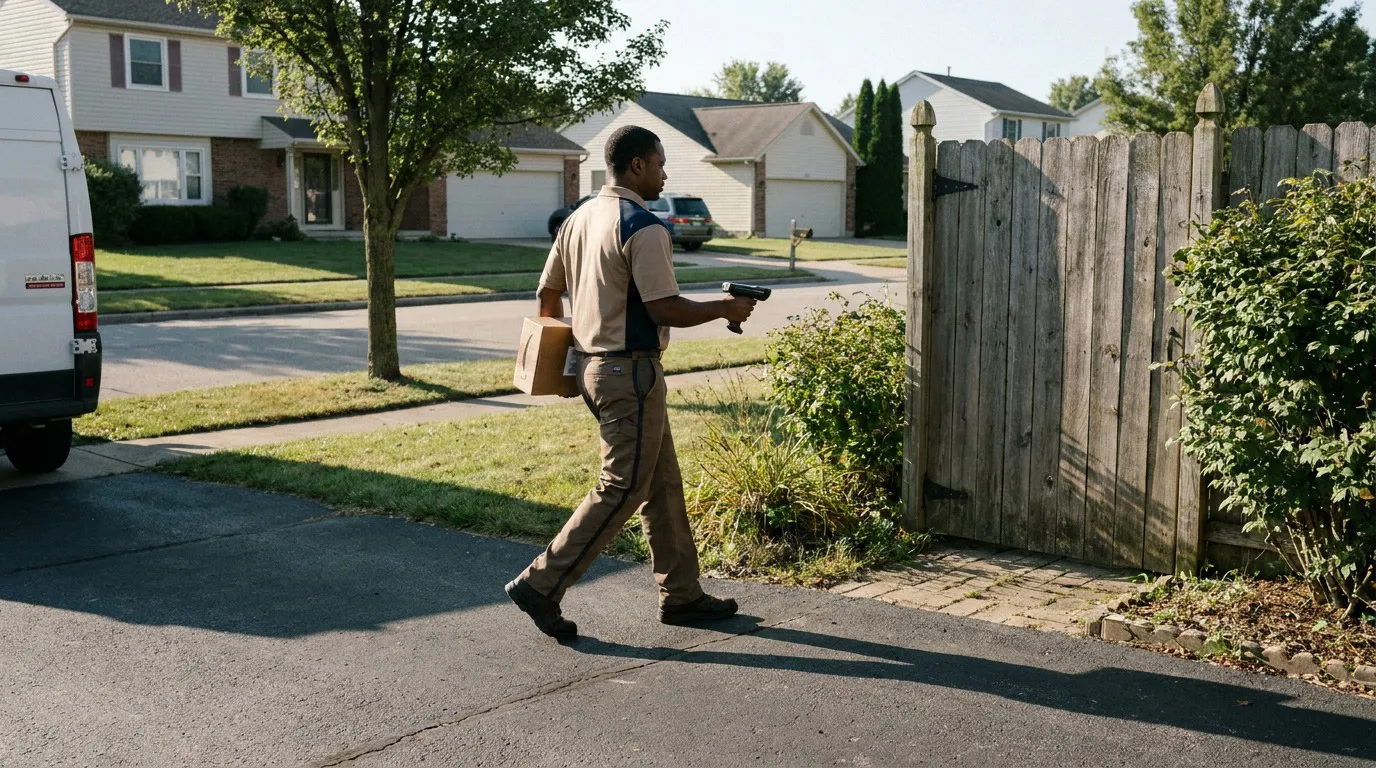
How Ohio’s Strict Liability Rule Protects Injured Workers
Ohio’s dog bite law generally puts responsibility on the people who control the dog. Under Ohio Revised Code § 955.28(B), "the owner, keeper, or harborer of a dog is liable in damages for any injury, death, or loss to person or property that is caused by the dog," subject to limited exceptions. You can read the full text of Ohio’s dog liability statute on the state’s official code website. An injured driver bringing a statutory claim generally does not need to prove the dog was known to be dangerous or that the owner was careless.
This rule differs from the "one bite" approach some states use. In those states, victims often must show the owner knew the dog was vicious. Ohio’s statute removes that burden for statutory claims. Injured people may also bring a separate common-law negligence claim, which does require proof of fault. To learn more, see our article on dog owner liability in Ohio without proof of negligence.
Who Can Be Held Responsible?
Liability under Ohio Revised Code § 955.28(B) can reach more people than the legal owner. A "keeper" usually has physical care or control of the dog. A "harborer" usually controls the property where the dog lives and lets it stay there. Depending on the facts, this could include a tenant, a relative, or another household member. As of the Ohio Supreme Court’s June 2026 decision in L.H. v. Sun Secured Financing, L.L.C., a landlord is considered a "harborer" under Ohio Revised Code § 955.28(B) only if the landlord actively shelters, protects, or exercises control over the dog itself; merely retaining control over the rented property or the area where an attack occurred is no longer enough, on its own, to make an out-of-possession landlord strictly liable. When more than one person is liable, Ohio’s joint and several liability rules, including Ohio Revised Code § 2307.22, may affect how damages are split.
Injuries Beyond Bite Wounds
The statute covers "any injury" caused by a dog, not only bites. If a dog chased you off a porch, knocked you down the steps, or made you fall while carrying a heavy box, you may still have a claim. You must still show the dog actually caused the injury. Broken wrists, knee injuries, and concussions can be just as serious as puncture wounds.
Can the Dog Owner Avoid Liability? Understanding the Exceptions
Ohio Revised Code § 955.28(B) lists only a few situations where the owner, keeper, or harborer is not strictly liable. Liability generally does not apply if the injured person was:
- Committing or attempting criminal trespass, or another crime more serious than a minor misdemeanor, on the owner’s property
- Committing or attempting such a crime against any person
- Teasing, tormenting, or abusing the dog on the owner’s property
A delivery driver doing their job usually falls outside these exceptions. Walking up a driveway to leave a package is generally lawful work, not trespass. Drivers usually have at least implied permission to approach the door. Still, an owner or insurer may argue an exception applies, claiming, for example, that you went through a locked gate, ignored a "No Trespassing" sign, or provoked the dog. These facts can be disputed, so evidence matters.
What the Door-to-Door Sales Provision Suggests
The statute specifically protects people who come onto a property only to sell door to door or solicit. They stay covered even if they lacked a required local permit or license, as long as they were not committing a crime more serious than a minor misdemeanor and were not teasing, tormenting, or abusing the dog. This suggests lawmakers meant to protect people who approach homes for business. The statute does not name delivery drivers, but this provision supports the argument that they are covered too.
💡 Pro Tip: Save your delivery scan record, route app data, or dispatch logs. These can show when you arrived and that you were there to make a delivery, which may help counter a trespass argument.
What Happens If You Defended Yourself From the Dog?
Ohio law generally lets you protect yourself during an attack. Under Ohio Revised Code § 955.28(A), a person may kill a dog that is chasing or approaching in a menacing fashion or apparent attitude of attack, that attempts to bite or otherwise endanger a person, or that kills or injures a person, at the time of that act. Using reasonable force to stop an attack generally does not count as "teasing, tormenting, or abusing" the dog.
Partial Fault and Your Delivery Driver Dog Bite Case
Ohio follows a modified comparative fault rule, which mainly matters for negligence claims. Under Ohio Revised Code § 2315.33, an injured person’s own fault does not bar recovery "if the contributory fault of the plaintiff was not greater than the combined tortious conduct of all other persons." Instead, the court reduces your damages by your percentage of fault. If your fault is greater than everyone else’s combined, you cannot recover. Ohio courts have generally treated the statutory exceptions under § 955.28(B), criminal trespass, committing a more serious crime, or teasing, tormenting, or abusing the dog, as the primary defenses to strict liability claims, with modified comparative fault under § 2315.33 applying more clearly to separate negligence claims.
Owners and insurers sometimes raise fault arguments to lower what they pay. For example, they may claim you ignored a "Beware of Dog" sign or reached over a fence. These arguments do not automatically defeat a claim.
| Issue | Ohio Law | How It May Affect a Driver |
|---|---|---|
| Liability standard | Strict liability, ORC § 955.28(B) | Generally no need to prove prior bites or carelessness |
| Exceptions | Trespass, crimes, teasing or abuse | Usually do not apply to lawful deliveries |
| Shared fault | Modified comparative fault, ORC § 2315.33 | Mainly in negligence claims, recovery is reduced by your share, or barred if your share is greater than others’ combined |
| Filing deadline | Two years for bodily injury, ORC § 2305.10 | Safest deadline to plan around |
Time Limits for Filing a Dog Bite Lawsuit in Ohio
You should generally plan to file within two years of the bite. Ohio Revised Code § 2305.10(A) states that "an action for bodily injury or injuring personal property shall be brought within two years after the cause of action accrues." You can review the two-year injury filing deadline in the official code. For most dog bites, the clock starts on the day of the attack. Special rules, such as extra time for minors, may apply.
Some claims might seem to have a longer deadline, but don’t count on it. Ohio Revised Code § 2305.07(B) allows six years for "an action upon a liability created by statute other than a forfeiture or penalty," and this six-year period has sometimes been linked to older personal-injury (dog bite) precedent such as Bora v. Kerchelich (1983), in which the Ohio Supreme Court applied the six-year statute of limitations to a statutory claim for injuries caused by a dog, not to property damage. For bodily injury dog bite claims, however, Ohio courts, including those in Franklin County and the Tenth District, have more consistently applied the two-year period under § 2305.10(A), even when the claim is brought as a strict liability claim under § 955.28. Hilty v. Topaz, a Tenth District Court of Appeals decision (2004-Ohio-4859), is a separate case addressing only the definitions of owner, keeper, and harborer under § 955.28(B) in the context of landlord liability; it does not discuss or apply the six-year statute of limitations under § 2305.07(B). Common-law negligence claims also have a two-year limit. Treat two years as your deadline and confirm your timeline with an Ohio attorney.
Building a Strong Claim After Being Bitten on Your Delivery Route
A strong claim usually means proving the attack, linking it to your injuries, and recording your losses. Helpful steps include photographing your wounds and the scene, getting the owner’s name and address, collecting witness contact details, reporting the attack to your employer, and getting medical care right away. Because you were hurt at work, you may also qualify for workers’ compensation, which may affect how much of any recovery goes back to repay benefits you received.
Damages in an Ohio dog bite claim may include medical bills, lost wages, pain and suffering, and scarring. Ohio caps noneconomic damages in many injury cases, though the cap does not apply to certain severe permanent injuries. A delivery driver injury lawyer can help gather records, deal with the homeowner’s insurer, and estimate the full value of your losses.
💡 Pro Tip: Keep a simple recovery journal. Notes about pain levels, missed shifts, and how scars affect your daily life can help show losses that medical bills alone don’t capture.
Frequently Asked Questions
1. Do I need to prove the dog had bitten someone before?
Generally, no. Under Ohio Revised Code § 955.28(B), strict liability applies no matter the dog’s history. You typically need to show the defendant was the owner, keeper, or harborer, that the dog caused your injury, and that no statutory exception applies.
2. Can I sue if the dog knocked me down but didn’t bite me?
Possibly, yes. The statute covers "any injury" caused by a dog. Falls and fractures caused by a charging or jumping dog may support a claim.
3. What if the dog belonged to a tenant, not the homeowner?
The tenant may be liable as an owner, keeper, or harborer under Ohio Revised Code § 955.28(B). A landlord usually is not liable unless the landlord actively sheltered, protected, or exercised control over the dog itself, as clarified by the Ohio Supreme Court’s 2026 decision in L.H. v. Sun Secured Financing, L.L.C. Simply retaining control over the rented property or the area where the attack happened is generally not enough on its own.
4. Will a "Beware of Dog" sign defeat my claim?
Not necessarily. A sign is not a statutory exception under § 955.28(B). An owner may raise it in a negligence argument under Ohio Revised Code § 2315.33, which could reduce damages.
5. How long do I have to file?
Plan on two years from the bite under Ohio Revised Code § 2305.10(A). Although § 2305.07(B) provides a six-year period for some statutory claims, Ohio courts have more consistently applied the two-year deadline to dog bite injury claims, so waiting is risky.
Protecting Your Rights After a Dog Attack on the Job
Ohio’s strict liability law can give injured delivery drivers real protection. Owners, keepers, and harborers may be responsible for bites, knockdowns, and other injuries their dogs cause, and the narrow exceptions rarely fit a driver doing lawful work. Fault arguments and filing deadlines can still affect your recovery, so acting early may help protect your options.
If a dog hurt you while you were working, getting answers soon can make a difference. Rinehardt Injury Attorneys can review your case and explain your options. Call 419-529-2020 or schedule your consultation today.
Disclaimer: This content is for informational purposes only and is not legal advice. Every case is unique, and results may vary. Consult an attorney about your specific circumstances.