Can Not Wearing a Seat Belt Reduce Your Columbus Car Accident Payout?
By John K. Rinehardt, Board Certified Civil Trial Attorney (NBTA)
09-08-26
Worried an Insurer Will Blame Your Seat Belt? Here Is What Ohio Law Really Says
If you were hurt in a crash without wearing a seat belt, the insurance company may plan to use that against you, but Ohio law limits how far they can go. In Ohio, not wearing a seat belt cannot bar your claim and cannot reduce your economic damages like medical bills and lost wages. It may only affect pain and suffering compensation, and only if the trier of fact finds your failure to buckle up actually worsened your injuries. If you are searching for answers about a columbus car accident and a possible reduced payout, this guide breaks it down in plain English.
Injured in a Columbus crash and worried the adjuster will blame your seat belt? You do not have to face it alone. Call Rinehardt Injury Attorneys at 419-529-2020 or reach out through our contact page for a free consultation. Our team stands up to insurers who try to shift blame onto injured people. Talk with an ohio seat belt defense 4513.263 lawyer who knows how these tactics work.
This post exists because too many injured people believe a myth: that a missing seat belt kills their case. It does not. Below, we explain the exact statute, the difference between bill compensation and suffering compensation, and how Ohio’s fault rules apply with a real number example.
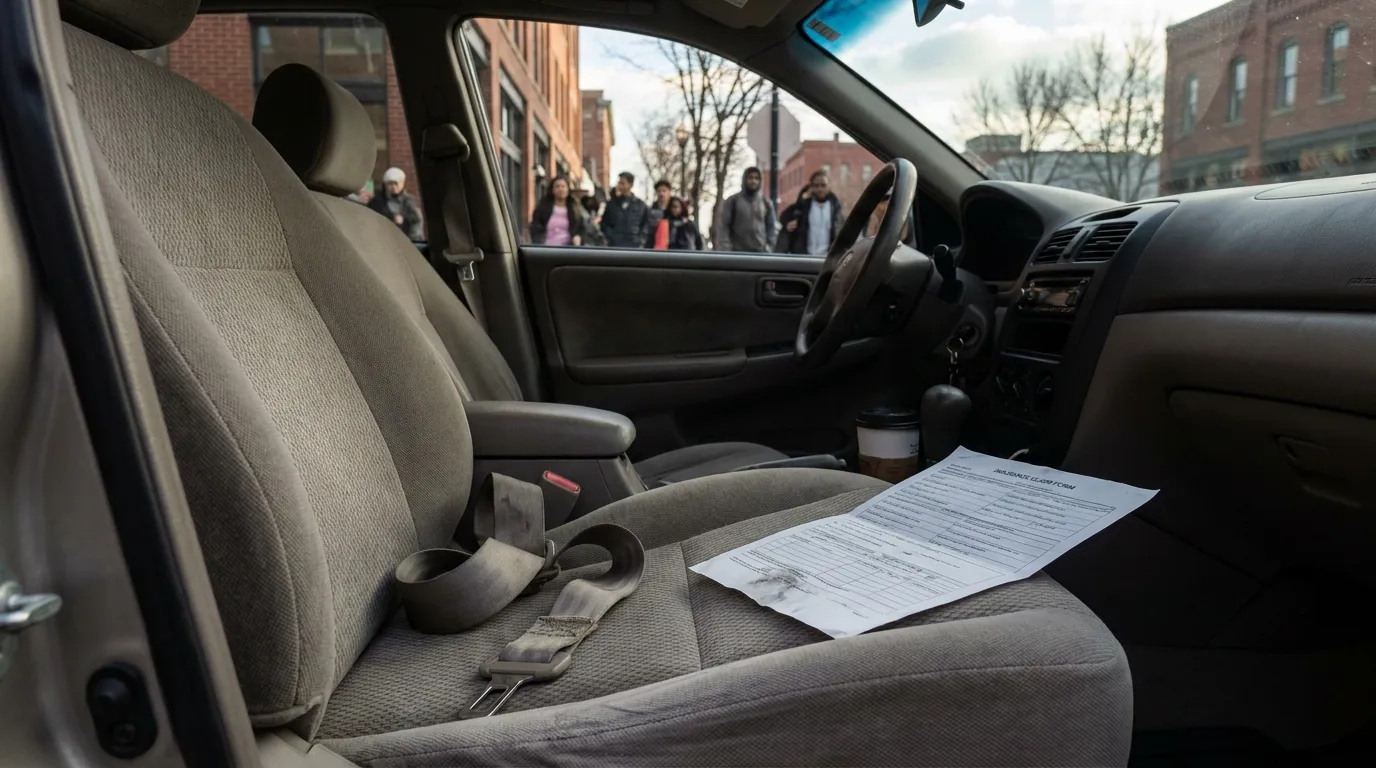
The Short Answer on Seat Belt Non-Use in Ohio
Not wearing a seat belt will not throw out your car accident claim in Ohio, and it will not touch your economic damages. Under Revised Code § 4513.263, seat belt non-use ohio evidence may only reduce the noneconomic portion of your compensation, the money for pain and suffering. Even that reduction applies only if the trier of fact finds your failure to buckle up actually worsened your injuries.
The key point: seat belt non-use is not proof you caused the crash. The statute expressly bars using non-use as evidence of negligence or contributory negligence. A driver who runs a red light is still responsible, whether or not you wore your seat belt. The seat belt question is a separate, narrow issue about injury severity, not crash fault.
The Ohio Seat Belt Defense 4513.263 Rule Explained
The ohio seat belt defense 4513.263 rule is written directly into Ohio Revised Code § 4513.263, and it is far narrower than insurers want you to think. The statute says evidence of failing to wear an available seat belt is not admissible to prove negligence or contributory negligence, and it may only diminish the noneconomic loss portion of damages. In everyday terms, a missing seat belt cannot be used to say the crash was your fault, and it can only chip away at pain and suffering money.
This is the single most important detail that most competing articles leave out. The statute protects your economic recovery entirely. Your medical bills, future treatment costs, and lost wages are shielded from the seat belt argument. Only the noneconomic slice is on the table, and the trier of fact must first find your failure to wear the belt contributed to harm before any reduction applies.
💡 Pro Tip: Ask early whether the insurer is raising the seat belt issue in writing. If they only hint at it verbally to pressure a quick settlement, that is often a sign they cannot actually prove your injuries were worsened by non-use.
What Counts as Noneconomic Loss Versus Economic Damages
Economic damages are your hard, provable dollar losses, while noneconomic damages cover the human costs harder to price. Economic damages include medical bills, rehabilitation, and lost income. Noneconomic damages cover pain, suffering, and reduced quality of life. Under Section 4513.263, only the noneconomic category can be reduced for seat belt non-use, so car crash damages columbus victims claim for treatment and wages stay protected.
Understanding this split matters because it changes how you value and document your case. For a fuller picture of every category available, see our guide on what damages you can claim after a Columbus auto accident.
How Comparative Negligence Affects a Columbus Car Accident Payout
Ohio uses a modified comparative negligence system, which means your own share of fault can reduce your recovery but does not automatically erase it. Under Ohio Revised Code § 2315.33, a court diminishes your compensatory damages by the percentage of fault assigned to you. Ohio’s modified comparative negligence statute also bars recovery only when your fault is greater than the combined fault of everyone else you are seeking recovery from.
Here is a concrete example. Suppose your damages total $200,000 and you are found 10% at fault. Your recovery would be reduced by 10%, leaving $180,000. That is a proportional cut, not a total loss, and it is the same math that applies to a reduced settlement columbus victims sometimes see when partial fault exists.
Ohio’s approach is relatively favorable to injured people compared to other states:
- Contributory negligence: being even 1% at fault can bar recovery completely.
- Pure comparative negligence: you recover your percentage of fault-free damages even if you are 99% at fault.
- Modified comparative negligence: you recover a reduced amount unless your fault crosses the 50% line, which is Ohio’s rule.
To understand how comparative negligence works in a negligence claim, think of it as a percentage split. Courts assign each party a share of fault, and you recover only the portion attributable to others. Outcomes depend on specific facts, so percentages are decided case by case.
The 50% Threshold and When You Can Still Recover
In Ohio, you can still recover as long as your share of fault is not greater than the combined fault of other parties. Practically, being 50% or less at fault still allows recovery, reduced by your percentage. Once your fault exceeds 50%, recovery is barred under Section 2315.33. This is why fighting over each percentage point of fault matters to your final ohio car accident compensation.
Ohio Seat Belt Law and Who Must Buckle Up
Ohio seat belt law generally requires drivers and front-seat passengers to wear an available safety belt. The mandate is a traffic-safety rule, and violating it can carry consequences separate from any injury claim. Rules can change and vary by seat position and age, so confirm current requirements before relying on any general statement.
Even so, breaking the seat belt rule does not hand the insurance company a free pass. Section 4513.263 was written specifically to keep that traffic violation from being used to prove you caused the crash. The mandate and crash-fault question are two different legal tracks.
How Insurers Use the Seat Belt Defense and How We Fight Back
Insurers raise the seat belt defense because it is a pressure tactic, not because the law gives it broad power. An adjuster may suggest your whole claim is weak, hoping you accept less than your ohio accident claim is worth. The statute limits the argument to the noneconomic portion, and the burden is on them to prove your injuries were actually worse without a belt.
We counter these tactics with evidence, not assumptions. As a columbus injury attorney team, we build cases with medical records, police reports, accident reconstruction, and biomechanical analysis showing whether a belt would have changed your injuries. Small town values, real results: we treat injured Ohioans like neighbors and push back hard when insurers try to blame the victim.
💡 Pro Tip: Keep every medical record and follow every treatment recommendation. Gaps in care are exactly what adjusters use to argue your injuries were less serious, and consistent treatment undercuts the seat belt argument.
Frequently Asked Questions
These are the questions injured Columbus drivers and passengers ask us most about seat belts and their payouts.
-
Does not wearing a seat belt affect my car accident claim in Ohio? It can, but only in a limited way. Under Section 4513.263, non-use cannot reduce economic damages like medical bills or lost wages, and it can only reduce noneconomic pain and suffering if the trier of fact finds your injuries were worsened by non-use.
-
Can I still sue if I was not wearing a seat belt in Ohio? Yes. A missing seat belt does not bar your claim. As long as your share of fault is 50% or less under Ohio’s modified comparative negligence rule, you can still pursue and recover compensation, reduced by your percentage of fault.
-
What is the seat belt defense under Ohio Revised Code 4513.263? It is an insurer argument that your failure to buckle up made your injuries worse. The statute bars using non-use to prove you caused the crash and allows it, at most, to diminish only the noneconomic loss portion of damages.
-
How much can my Columbus settlement be reduced if I am found partly at fault? It depends on your fault percentage. For example, a $200,000 claim reduced by 10% fault leaves $180,000. If your fault exceeds 50%, recovery is barred entirely under Section 2315.33.
-
Do medical bills count as protected damages? Yes. Medical bills and lost wages are economic damages, which the seat belt statute does not allow to be reduced for non-use.
The Bottom Line on Seat Belts and Your Ohio Payout
A missing seat belt is not the case-ending problem insurers make it sound like, and Ohio law is on your side. The ohio seat belt defense 4513.263 rule protects your economic damages entirely and limits any reduction to the noneconomic portion, and only if worsened injuries are proven. Combined with Ohio’s modified comparative negligence rule, many injured people who are 50% or less at fault still recover meaningful ohio car accident compensation. Every case turns on its own facts, so outcomes are never guaranteed.
If an insurer is blaming your seat belt to shrink your recovery, let us fight for the compensation you deserve, every step of the way. Learn more and connect with our team at Rinehardt Injury Attorneys, where we stand up for injured Ohioans and hold at-fault parties accountable.