What a Missing Post-Accident Test Record Means for Columbus Truck Victims
By John K. Rinehardt, Board Certified Civil Trial Attorney (NBTA)
10-01-26
When the Test That Should Exist Simply Isn’t There
You suspect the truck driver who hurt you was impaired, but no one can produce a drug or alcohol test, and now you feel like the truth is slipping away. That fear is real and more common than most families realize after a serious crash with an 18-wheeler. The good news is that a missing test is not the end of your case. In many situations, the absence of a required test can actually strengthen your claim, because federal law under 49 cfr 382.303 post accident testing forces trucking companies to test their drivers and document exactly why a test did not happen. If you were injured in a Columbus truck accident and cannot find that record, you still have options.
Rinehardt Injury Attorneys has spent more than 20 years fighting for injured people across central and north-central Ohio, from Columbus to Mansfield. If you are worried about a missing post-accident drug test record, our 49 cfr 382.303 post accident testing lawyer team can help you act before evidence disappears. Call us at 419-529-2020 or reach out through our contact page for a free consultation.
The Short Answer: What a Missing Test Record Means for Your Claim
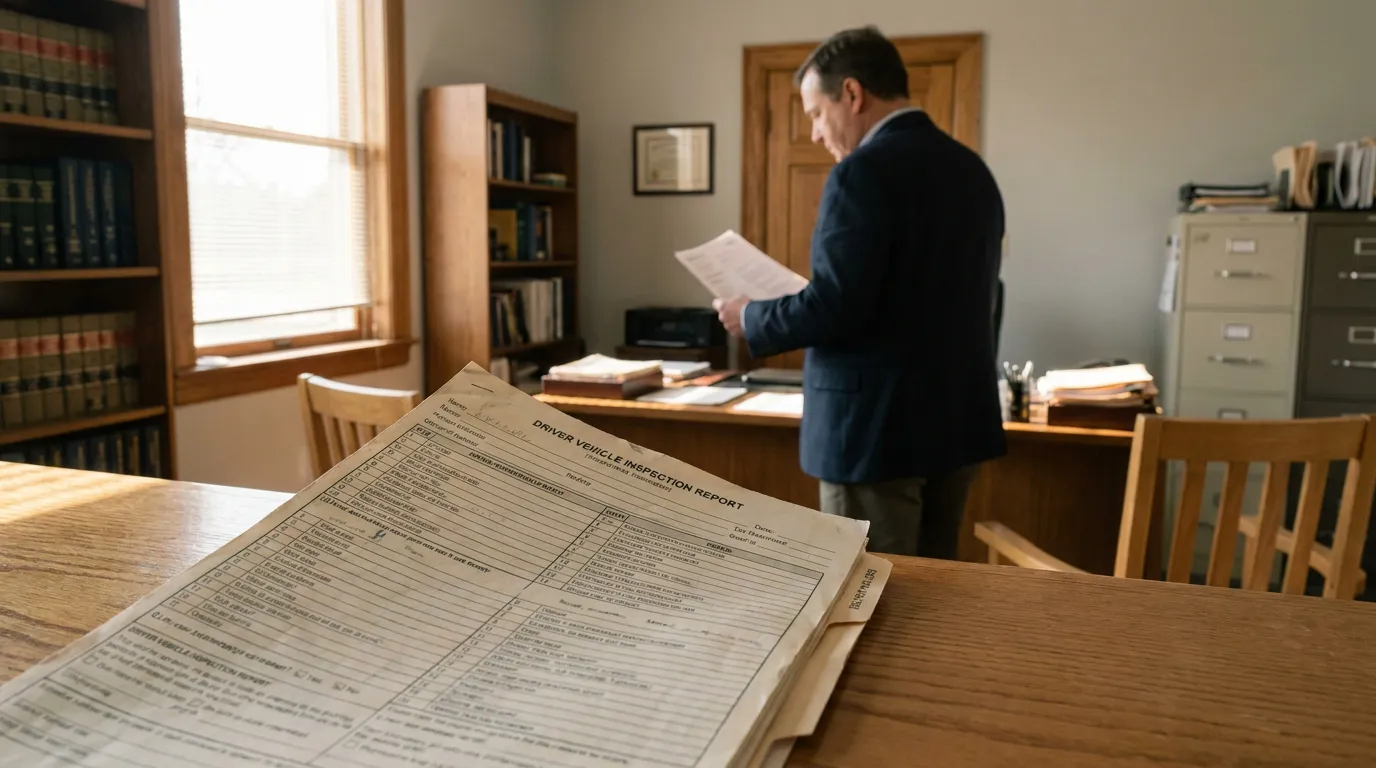
Under federal law, a trucking company must drug- and alcohol-test its driver after a fatal crash, or after an injury or tow-away crash where the driver is cited. If that test is missing, the company must have documented why it was not done. A missing or unexplained record can support an inference of fault against the carrier and may be treated as evidence of negligence. The gap in the paperwork can become part of your proof.
What 49 CFR 382.303 Post-Accident Testing Requires After a Truck Crash
The federal rule governing drug and alcohol testing after a truck crash is meant to protect the public, not shield the carrier. It applies to commercial drivers and lays out three triggering scenarios: a crash involving a fatality; a crash where someone is injured and needs immediate medical treatment away from the scene and the driver is cited; or a crash where a vehicle is towed and the driver is cited. When one of these occurs, testing is not optional. A carrier’s failure to follow it can amount to an FMCSA testing failure that a jury may weigh against the company.
The 2-, 8-, and 32-Hour Testing Windows
Timing is critical under this regulation. The rule requires an alcohol test as soon as practicable. If not administered within two hours, the employer must prepare and maintain a record stating why. If not administered within eight hours, the employer must stop trying and document the reason. For drugs, the window is longer: testing must occur as soon as practicable but no later than 32 hours following the accident.
The Rule Most People Miss: The Company Must Document Why No Test Was Done
Here is the part competitors rarely explain, and it is the heart of your case. The regulation does not just require testing. It requires 382.303 documentation, meaning the carrier must create and keep a written record explaining why a test was not performed on time. That documentation duty is why a missing DOT test record matters so much. If the company cannot produce a test and cannot produce the written explanation, that void raises hard questions about what the carrier knew and failed to do.
Why a Post-Accident Test Record Goes "Missing"
A test record can go missing for different reasons, and each carries different weight. Understanding which scenario you face helps your legal team decide how to respond. Generally, a post-accident test record Ohio families search for falls into one of these categories:
- Never administered: The carrier failed to test the driver within the required windows and may not have created the mandatory written explanation.
- Administered but withheld: A test was performed, but results are not being shared, often surfacing only after formal demand.
- Destroyed or purged: The record once existed but was discarded, sometimes because the company let it lapse under retention limits.
Retention limits create real urgency. Test results must be retained for five years if positive and one year if negative. Meanwhile, carriers must keep electronic logging device records for only six months, after which data can legally be purged. Once that information is gone, it can be impossible to reconstruct, which is why moving quickly protects truck crash victim rights.
A Missing Test Can Still Help Your Case Through Spoliation
A missing test does not have to be a dead end, because Ohio recognizes spoliation. Spoliation means the loss, destruction, or failure to preserve evidence that a party had a duty to keep. When spoliation of test evidence occurs, a court may allow an adverse inference. In practical terms, the trier of fact, defined under Ohio law as the jury or, in a nonjury case, the court (ORC 2307.011(K)), may presume that the missing evidence would have damaged the trucking company’s case. That presumption can shift real leverage back to the injured person. Ohio also recognizes a separate independent tort claim for intentional spoliation of evidence.
Courts do not apply this remedy automatically. A judge generally considers whether the carrier had a duty to preserve the record, whether the loss was willful, and whether you were prejudiced. Because these determinations are fact-sensitive, having counsel document the gap early makes a meaningful difference.
How a Preservation Letter Protects Your Evidence
One of the most important early steps is sending a preservation letter. This formal notice tells the carrier and its insurer to keep all relevant records, including test results, driver logs, and electronic data. Sending it promptly helps establish the carrier’s duty to preserve and undercuts any later claim that evidence was lost innocently. For a deeper walkthrough, our guide on how to preserve evidence after a truck crash explains the broader documentation steps.
How a Missing Test Affects Fault and Compensation Under Ohio Law
Ohio uses a modified comparative negligence system, which directly shapes what a missing test can mean for your recovery. Under Ohio’s modified comparative negligence rule (ORC 2315.33), your own share of fault does not bar recovery as long as it is not greater than fifty percent. Your damages are then reduced in proportion to your percentage of fault. When a missing or suppressed test helps shift blame onto an impaired driver, it can reduce the fault assigned to you and protect more of your compensation in a Columbus truck injury claim.
Real cases show how evidence gaps can still lead to meaningful results. Rinehardt Injury Attorneys once recovered $3.1 million for a 20-year-old truck accident victim, a reminder that a determined push for the truth can convert missing records into accountability. Every case is different, and past results do not guarantee any particular outcome.
Ohio’s Two-Year Deadline: Why Acting Fast Matters
Time is not on your side when a test record is already fragile. Ohio generally sets a two-year deadline for injury claims (ORC 2305.10), and the clock typically starts when the injury occurs. Limited exceptions exist, but courts interpret them narrowly, so you should never assume tolling will extend your time. This civil deadline is separate from any government reporting process.
Fatal Crashes: Wrongful Death and the Missing Test
When a truck crash takes a life, Ohio provides a separate wrongful death claim. Under ORC 2125.01, a death caused by another’s wrongful act, neglect, or default can support an action for damages. Such a claim must be brought by the personal representative of the decedent for the benefit of the surviving spouse, children, parents, and other next of kin (ORC 2125.02). A wrongful death action generally must be brought within two years of the death (ORC 2125.02). In fatal cases, a missing post-accident test can be critical to proving carrier negligence.
What Columbus Truck Accident Victims Should Do Now
The steps you take in the first days often decide how much evidence survives. Because Rinehardt Injury Attorneys has deep Columbus and Mansfield roots, we know how quickly trucking records can vanish. Consider these practical moves to safeguard your truck crash victim rights:
- Get medical care and keep every record, because your health and documentation both matter.
- Ask that the carrier preserve the 382.303 record, including any written explanation for a missing test.
- Photograph the scene and vehicles, and save names of witnesses and responding officers.
- Contact counsel quickly, so a preservation letter can go out before data is purged.
💡 Pro Tip: Write down everything you remember about the crash and the driver’s behavior as soon as possible. Your contemporaneous notes can become valuable evidence if the carrier’s paperwork is incomplete.
Frequently Asked Questions
-
Is a trucking company required to drug test its driver after a Columbus crash? Generally, yes. Federal law requires testing after a fatal crash, or after an injury or tow-away crash where the driver is cited.
-
What happens if there’s no post-accident drug test after a truck crash? The carrier must document why a test was not performed. When it cannot produce the test or the written explanation, that failure can be treated as evidence of negligence.
-
Can a missing test record still help my injury claim? Often, yes. Through spoliation and an adverse inference, the trier of fact may presume the missing evidence would have hurt the trucking company.
-
Does a refusal to test count against the driver? Under federal rules, a refusal to test generally carries the same weight as a confirmed positive result, which can support your claim.
-
How long do I have to file a truck accident claim in Ohio? Ohio generally allows two years from the date of injury under ORC 2305.10, with only limited exceptions.
Turning a Missing Record Into Accountability
A missing post-accident drug test record can feel like a door slamming shut, but it is frequently a door your legal team can pry back open. Federal 49 cfr 382.303 post accident testing rules, combined with Ohio’s comparative negligence and spoliation doctrines, give injured people real tools to hold careless carriers responsible. The keys are acting before evidence is purged, demanding the required documentation, and building your case around what the carrier failed to preserve. You do not have to untangle these rules alone.
Rinehardt Injury Attorneys is proud to build lasting relationships with the central Ohio communities we serve, and we explain the law in plain English so you always know where you stand. If a test record is missing after your truck crash, let us help you fight for the answers and recovery you deserve. BE SMART. GET RINEHARDT. Reach the team at Rinehardt Injury Attorneys to get started today.