What Is a Mansfield Bar and How Does It Affect Truck Crash Claims?
By John K. Rinehardt, Board Certified Civil Trial Attorney (NBTA)
06-21-26
Understanding the Mansfield Bar and Its Role in Truck Crash Cases
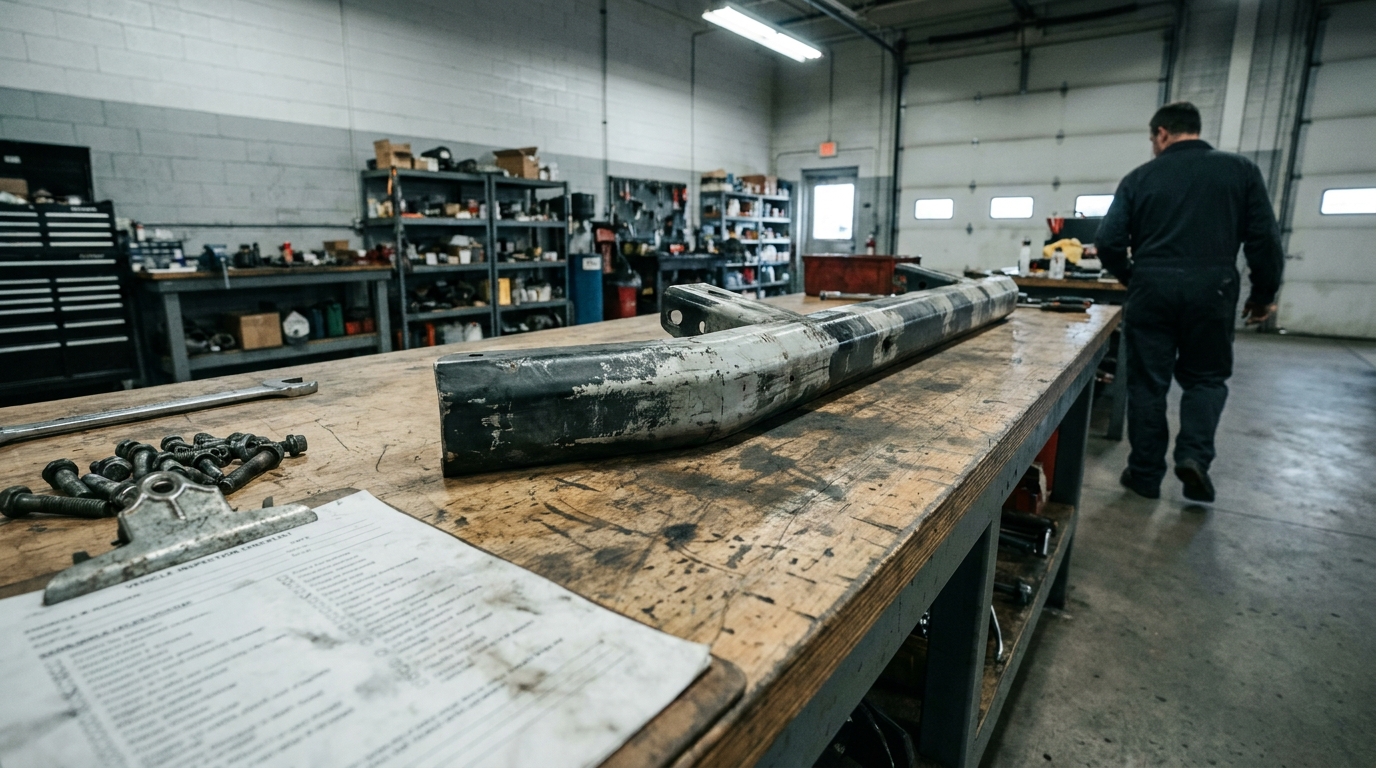
If you’ve been hurt in a rear-end collision with a semi-truck in Mansfield, Ohio, understanding what a "Mansfield bar" is matters to your legal claim. A Mansfield bar, also called a rear underride guard, is a steel safety device mounted to the back of a trailer designed to prevent smaller vehicles from sliding beneath the trailer during a collision. When these guards fail or don’t meet federal standards, the results can be catastrophic. Rear underride crashes occur when a passenger vehicle slides under the trailer’s rear end, potentially causing passenger compartment intrusion (PCI), which leads to severe injuries and fatalities. Understanding when guard failure gives rise to a legal claim can be critical for Ohio families seeking justice after a devastating Richland County truck crash.
If you were injured or lost a family member in a semi truck underride accident, Rinehardt Law Firm can help you explore your legal options. Call 419-529-2020 or reach out online to get started.
Where the Name "Mansfield Bar" Comes From
The Mansfield bar gets its name from actress Jayne Mansfield, who died in a rear underride crash in 1967. Her vehicle slid beneath a tractor-trailer, and the public outcry spurred federal action on underride protection.
The federal government first established rear impact guard standards in 1996 through FMVSS No. 223 and FMVSS No. 224. FMVSS No. 224 requires new trailers and semitrailers with a gross vehicle weight rating (GVWR) of 10,000 pounds or more to be equipped with a rear impact guard meeting FMVSS No. 223 standards. These original requirements were based on crash protection at only 30 mph and were widely considered insufficient.
How Federal Regulations Have Strengthened Underride Guards
In 2015, NHTSA issued a Notice of Proposed Rulemaking (NPRM) to upgrade rear impact guard standards, responding to petitions from the Insurance Institute for Highway Safety (IIHS) and safety advocate Marianne Karth with the Truck Safety Coalition. The proposed upgrade required rear impact guards to withstand impacts at 35 mph to protect occupants of compact and subcompact passenger cars, aligning U.S. rules with Canada’s existing standard.
After nearly seven years of rulemaking, the final rule was published in July 2022. The upgraded standard requires guards to resist 350,000 N of force without deflecting more than 125 mm and absorb at least 20,000 J of energy, a significant increase from the prior 50,000 to 100,000 N requirements. The compliance date was July 15, 2024, meaning all new trailers manufactured after that date must meet the stronger standard.
💡 Pro Tip: If your crash involved a trailer built before July 2024, the older, weaker standard may have applied. An attorney experienced in NHTSA underride guard regulations can investigate whether the guard met minimum standards at the time of manufacture.
What the Upgraded Standard Requires
| Requirement | Old Standard (1996) | Upgraded Standard (2024) |
|---|---|---|
| Crash protection speed | 30 mph | 35 mph |
| Force resistance | 50,000, 100,000 N (point loads) | 350,000 N (uniform distributed load) |
| Maximum deflection | Not uniformly specified | 125 mm |
| Energy absorption | Not uniformly specified | 20,000 J minimum |
| Alignment with Canada | No | Yes (CMVSS No. 223) |
Why the Compliance Gap Matters for Your Claim
NHTSA estimated that roughly 94 percent of new trailers already complied with the upgraded Canadian standard before the rule took effect. That means approximately 6 percent of the fleet had weaker guards, a detail highly relevant in crash litigation. If you were struck by a trailer with a substandard guard, the trailer manufacturer or trucking company could bear additional liability.
💡 Pro Tip: Preserving evidence of the trailer’s manufacture date, guard specifications, and maintenance records is essential. Learn more about how to document evidence after a truck accident to protect your claim.
How a Defective Mansfield Bar Affects Truck Accident Injury Claims in Mansfield
A failed or inadequate underride guard can open multiple theories of liability in a truck accident case. When PCI occurs because a Mansfield bar buckled, detached, or wasn’t strong enough to prevent underride, the injured party may have claims against:
- The trailer manufacturer, if the guard was defectively designed or didn’t comply with applicable FMVSS standards.
- The trucking company, if it failed to inspect, maintain, or replace a damaged or non-compliant guard.
- The trailer owner or lessor, if they placed a non-compliant trailer into commerce.
- Third-party maintenance providers, if negligent repairs contributed to guard failure.
Establishing that a guard violated federal safety standards can serve as powerful evidence of negligence. Courts may consider whether the guard met FMVSS No. 223 requirements applicable when the trailer was built, and whether the trucking company knew or should have known the guard was inadequate. In Ohio, compliance with regulatory standards is not an absolute defense in strict liability actions, though it may be relevant evidence under Ohio Revised Code § 2307.75(B)(4).
💡 Pro Tip: Product liability claims involving defective Mansfield bars are subject to a two-year statute of limitations under Ohio Revised Code § 2305.10(A), plus a 10-year statute of repose under § 2305.10(C)(1) measured from when the product was delivered to its first purchaser or lessee. Exceptions may apply in fraud cases, express written warranties exceeding 10 years, or plaintiff disability. Acting quickly helps ensure you don’t lose your right to file.
Insurance Coverage in Mansfield Bar Truck Accident Cases
Understanding insurance coverage is important when pursuing a rear underride guard legal claim. FMCSA requires commercial trucks carrying non-hazardous freight over 10,001 pounds to carry minimum liability coverage of $750,000 under 49 CFR § 387.9. Trucks hauling oil (which is classified as a hazardous material under 49 CFR 172.101) or other hazardous materials and substances not in the highest-risk category must carry $1 million. Trucks hauling the most dangerous hazardous materials must carry a minimum of $5 million in liability coverage under 49 CFR § 387.9. This includes carriers transporting hazardous substances (as defined in 49 CFR 171.8) in bulk in cargo tanks, portable tanks, or hopper-type vehicles with capacities exceeding 3,500 water gallons; bulk Division 1.1, 1.2, or 1.3 materials; bulk Division 2.3 Hazard Zone A materials; bulk Division 6.1 Packing Group I Hazard Zone A materials; bulk Division 2.1 or 2.2 materials; or highway route controlled quantities of Class 7 materials as defined in 49 CFR 173.403. Many shippers and brokers require trucks to carry at least $1 million regardless of freight type.
These policy limits matter because underride crashes produce catastrophic injuries. Traumatic brain injuries, spinal cord damage, amputations, and fatalities are common outcomes of PCI events. Medical expenses, lost wages, long-term care, and non-economic damages can quickly surpass minimum coverage thresholds, making it critical to identify all available insurance policies and potentially liable parties.
Truck Accident Lawyer in Mansfield: Filing Deadlines and Ohio Law
Under Ohio law, personal injury claims from truck accidents must generally be filed within two years of when the cause of action accrues, as set forth in Ohio Revised Code § 2305.10. This deadline applies to both negligence claims and product liability claims arising from a defective underride guard. Missing this window can permanently bar your right to recover compensation.
Ohio courts generally interpret tolling exceptions narrowly. While certain circumstances, such as the injured party being a minor or mentally incapacitated, may extend the filing deadline, these exceptions require specific factual showings. If you suspect you have a Mansfield bar truck accident claim, consulting an attorney promptly is critical.
💡 Pro Tip: The statute of limitations clock typically begins running on the crash date, not when you discover the full extent of injuries, though limited exceptions may apply under § 2305.10(B). Don’t assume you have extra time to file.
Key Steps After a Rear Underride Crash
- Request a copy of the police report and any accident reconstruction analysis.
- Photograph the trailer’s rear impact guard, including visible damage, bending, or detachment.
- Identify the trailer’s manufacturer, model year, and VIN to determine which FMVSS standard applied.
- Seek immediate medical treatment, even if injuries seem minor.
- Contact an underride accident attorney who can preserve critical evidence before the trucking company repairs or disposes of the trailer.
💡 Pro Tip: Trucking companies aren’t required to preserve damaged trailers indefinitely. Sending a spoliation letter through your attorney early can help prevent destruction of key physical evidence.
Frequently Asked Questions
1. What is a Mansfield bar on a semi-truck?
A Mansfield bar is a rear underride guard, a steel structure attached to the back of a trailer designed to prevent passenger vehicles from sliding underneath during rear-end collisions. Federal standards under FMVSS No. 223 and No. 224 set minimum strength and energy absorption requirements.
2. When did the upgraded underride guard standard take effect?
The compliance date for the upgraded federal rear impact guard rule was July 15, 2024. All new trailers manufactured after that date must meet the stronger standard, requiring protection in crashes at 35 mph rather than 30 mph.
3. Can I sue if a Mansfield bar failed in my truck crash?
You may have grounds for a negligence or product liability claim if a rear underride guard failed to meet applicable FMVSS standards or was improperly maintained. Liability could extend to the trailer manufacturer, trucking company, or maintenance providers.
4. How long do I have to file a truck accident claim in Ohio?
Under Ohio Revised Code § 2305.10(A), you generally have two years from when the cause of action accrues to file a personal injury lawsuit. Product liability claims also carry a 10-year statute of repose under § 2305.10(C)(1), subject to limited exceptions.
5. What is the minimum insurance coverage for commercial trucks?
FMCSA requires minimum $750,000 liability coverage for trucks hauling non-hazardous freight over 10,001 pounds under 49 CFR § 387.9. Trucks hauling oil (classified as a hazardous material under 49 CFR 172.101) or other hazardous materials and substances not in the highest-risk category must carry $1 million. Trucks hauling the most dangerous hazardous materials must carry a minimum of $5 million under 49 CFR § 387.9; this includes bulk hazardous substances in cargo tanks, portable tanks, or hopper-type vehicles with capacities exceeding 3,500 water gallons; bulk Division 1.1, 1.2, or 1.3 materials; bulk Division 2.3 Hazard Zone A materials; bulk Division 6.1 Packing Group I Hazard Zone A materials; bulk Division 2.1 or 2.2 materials; and highway route controlled quantities of Class 7 materials as defined in 49 CFR 173.403. Many shippers require at least $1 million regardless of cargo type.
Protecting Your Rights After a Mansfield Ohio Truck Crash
A Mansfield bar that fails to do its job can turn a survivable rear-end collision into a life-altering tragedy. Whether the guard was defectively manufactured, failed to meet federal standards, or was neglected by the trucking company, you may have the right to pursue compensation for medical bills, lost income, long-term care, and pain and suffering. The legal landscape surrounding underride guards is complex, and acting quickly to preserve evidence and understand your rights can make a meaningful difference in your claim’s outcome.
The team at Rinehardt Law Firm is ready to help families across Mansfield and central Ohio who have been affected by truck crash injuries. Call 419-529-2020 or contact us today to discuss your case.